Benjamin Eye — Home page
310.275.5533
call or text
BenjaminEye.com - home page
310.275.5533
call or text
Home / Ophthalmology Blog / Interview with Arhur Benjamin: A symfony for your eyes! (part 1)

Interview with Arhur Benjamin: A symfony for your eyes! (part 1)

Published: November 9, 2022

Symfony lenses are new artificial lens that offer perfect vision and high-contrast at any distance, or even in low light. However, only 30-60% of people with cataracts are suitable candidates. You need to be thoroughly examined first to see if you are a good candidate.

Interview with Arhur Benjamin: A symfony for your eyes! (part 1)

Interview with Arthur Benjamin: A symphony for your eyes! (part 1)

Attentive readers will recall our conversation about the unique Symfony lenses – a new artificial lens that offers perfect vision and high contrast at any distance, or even in low light. Benjamin Eye Institute, as always, is at the forefront and has already been working with these new lenses for about a month. They were one of the first in Los Angeles.

Are the Symfony lenses already ideal, or could they be improved upon? Where do we go from here?

Technology never stops, but these lenses are so close to perfect that it’s hard to imagine anything better. So what lies ahead? Well, maybe we won’t even need surgery in 40 years, or even 20. There could be stem cells that regenerate the lens, or we could extract the clouded lens and fill the lens capsule with a substance that optimizes refraction in each individual case. But this is all in the future, and we need to utilize the innovations of our time.

The gap between the invention of the lens and its implementation took a while. A lot of people are convinced that there is certain inertia, so to speak, from the pharmaceutical companies that produce these kinds of lenses and implants. They aren’t interested in progress or these superlenses. Is this true?

Just the opposite. No one want surgery, and would rather things just regenerate themselves, like in the movie Elysium, but our success now depends both on the lenses and the eyes themselves. If you have glaucoma, even the most magical lens will not help. And if you have retinal problems or macular degeneration, then again there is no lens that can help. Regarding these new lenses, we do what we can.

Which is?

Identifying which patients could really benefit from it. If the only thing stopping you from seeing well is cataracts, then Symfony is an option.

And what if the lens isn’t a good fit?

We don’t offer Symfony to everyone; only 30-60% of people with cataracts are suitable candidates. Sometimes people will come and say, “Here’s my money. I want this lens,” but unfortunately it isn’t always possible. In order to make this assessment, we must have first-class diagnostic equipment to know the condition of your retina, whether you have astigmatism, and what the condition of the optic nerve is. People will pay money for these lenses elsewhere, where they are offered the “lowest price”, but they won’t get the desired result.

So they are just a mismatch for the lens?

It’s impossible to just take everyone at random and see what happens. Nobody wants unnecessary financial or emotional problems. The patient is disappointed and the doctor takes the rap. So you need to come and be thoroughly examined. There’s a cataract, but what does everything else look like? We need a plan that includes accurate measurement, a properly-selected lens, and a properly-done operation to neutralize astigmatism, without complication. We have to sort out the cornea and the problem of dry eyes, which don’t allow the operation to take place even if all other factors are perfect. All these are part of the process.

Do people come to you to repair prior operations?

Someone will come in and say, “I was at this place and they performed the operation; now I can’t see. What can I do?” So I ask, “What did the doctor say?” And they respond with, “The doctor told me that they did everything right, and the fault lies with my eyes themselves.”

Returning to Symfony: I understand that the old lenses are still very popular, in spite of the new lenses’ capabilities.

Yes, and for many reasons. If your retina is such that it cannot see the difference between the old and new lenses, then why spend money on the new ones?

The new lens is creating quite a stir, is it not?

Yes, very much so. It is being advertised everywhere, except for on our website, of course.

The blog is on the website, though. And why is this such an innovative thing?

To be continued

LASIK, CATARACT, GLAUCOMA: Take advantage of the latest technology and one of the best teams in LA

Benjamin Eye Institute310-494-7193
Back

Related Articles

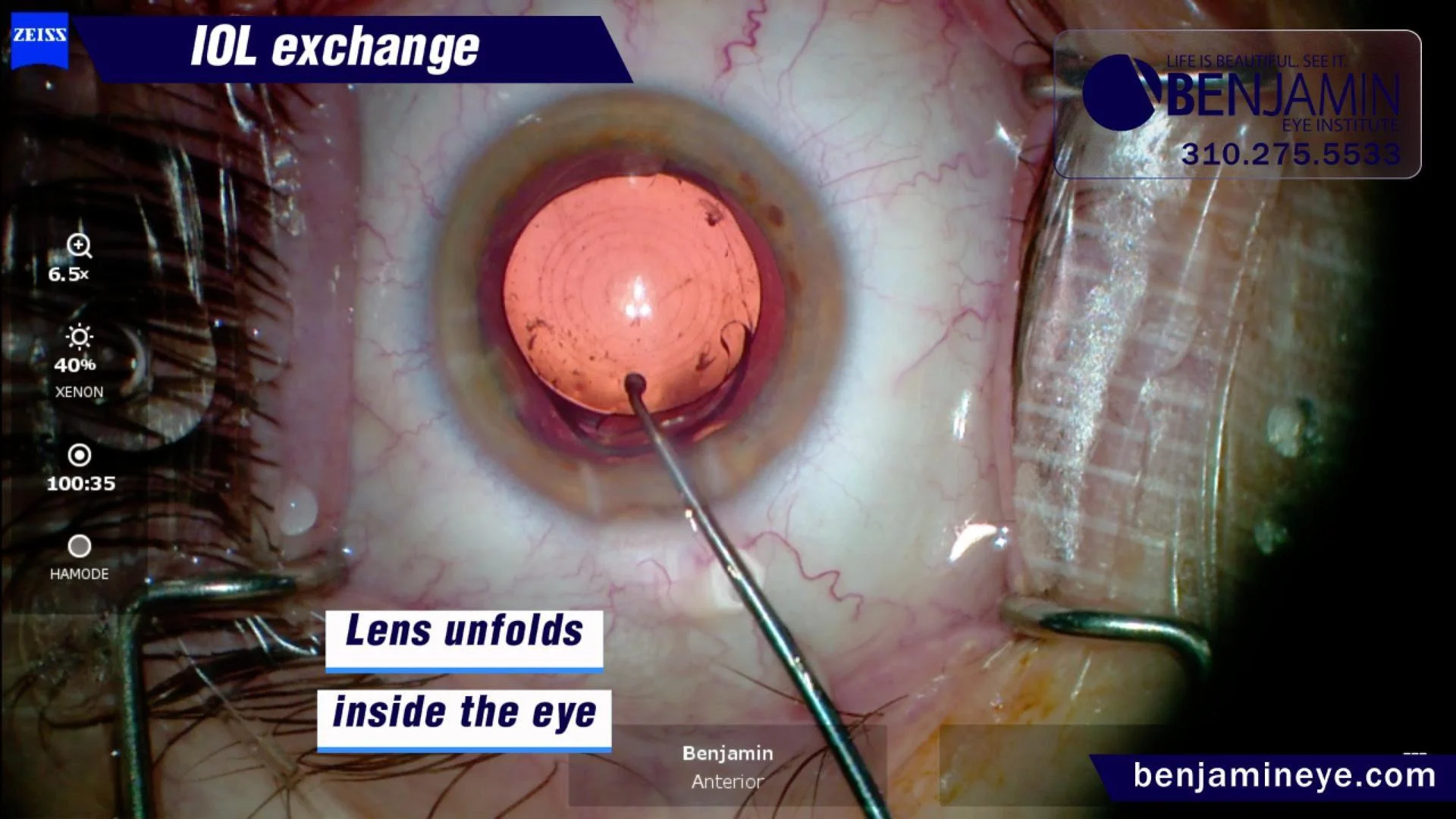
IOL Exchange Surgery: When a Lens Implant Needs to Be Removed and Replaced

IOL Exchange Surgery: When a Lens Implant Needs to Be Removed and Replaced

May 28, 2026

An IOL exchange is a specialized procedure used to remove and replace a previous lens implant when the original IOL no longer provides the best possible vision or when a different lens may better support the patient’s needs.

more
Cataract Surgery with OMNI MIGS: restoring vision while protecting eye health

Cataract Surgery with OMNI MIGS: restoring vision while protecting eye health

January 29, 2026

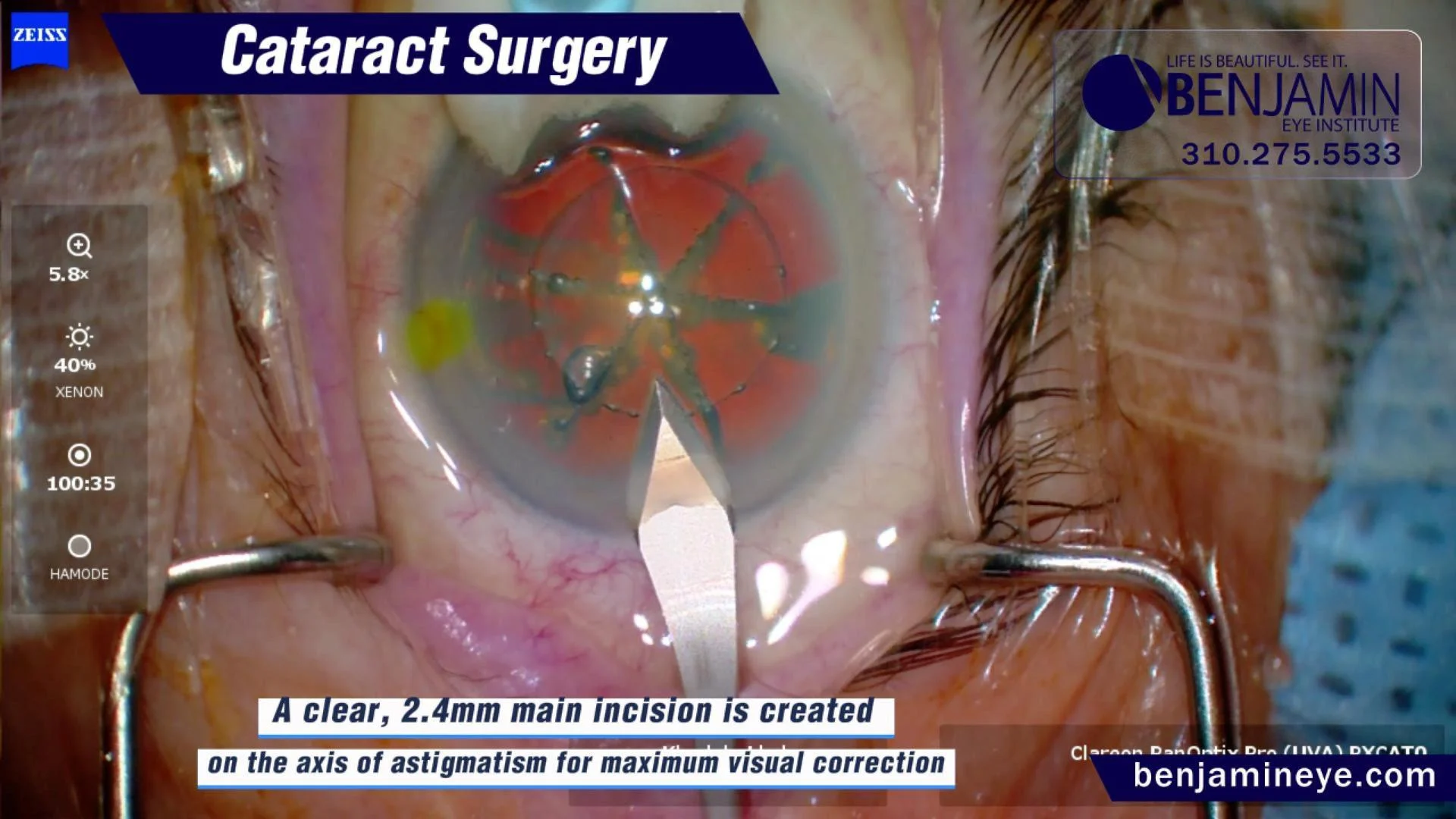
Cataract surgery today is no longer just about removing a cloudy lens—it’s about improving overall eye health and long-term visual outcomes. For patients who have both cataracts and glaucoma (or elevated eye pressure), modern ophthalmology now offers a powerful combined solution: cataract surgery with OMNI® minimally invasive glaucoma surgery (MIGS).

more
Cataract Surgery: Myths vs. Facts

Cataract Surgery: Myths vs. Facts

May 14, 2025

Cataracts are a common vision concern, yet misinformation still makes many people hesitant about seeking treatment. At Benjamin Eye Institute, we're here to clear the confusion and ensure you have the facts about cataract surgery.

more
The Ultimate Vision Transformation: From ICL to LASIK to Light Adjustable Lens!

The Ultimate Vision Transformation: From ICL to LASIK to Light Adjustable Lens!

February 20, 2025

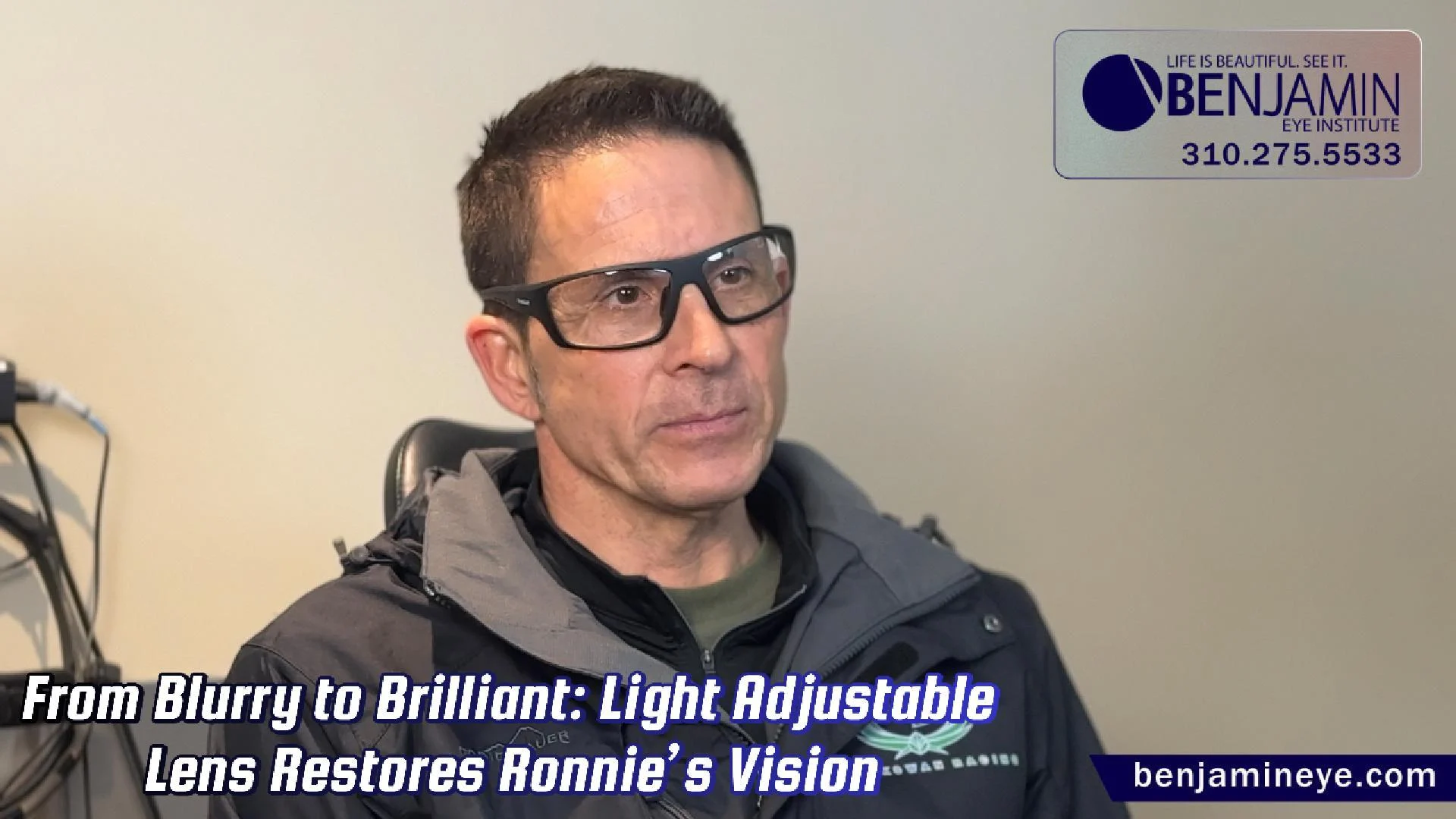
Meet Ronnie, a longtime friend and patient of Dr. Arthur Benjamin, who has been on an incredible vision correction journey! From wearing rigid gas permeable contact lenses and being severely nearsighted (-16 to -17 prescription) to undergoing Intraocular Phakic Contact Lens (ICL) implantation, LASIK, and now Cataract Surgery—his case is a true eye care success story!

more
See the Difference: How ALLY® Is Changing Cataract Surgery

See the Difference: How ALLY® Is Changing Cataract Surgery

January 31, 2025

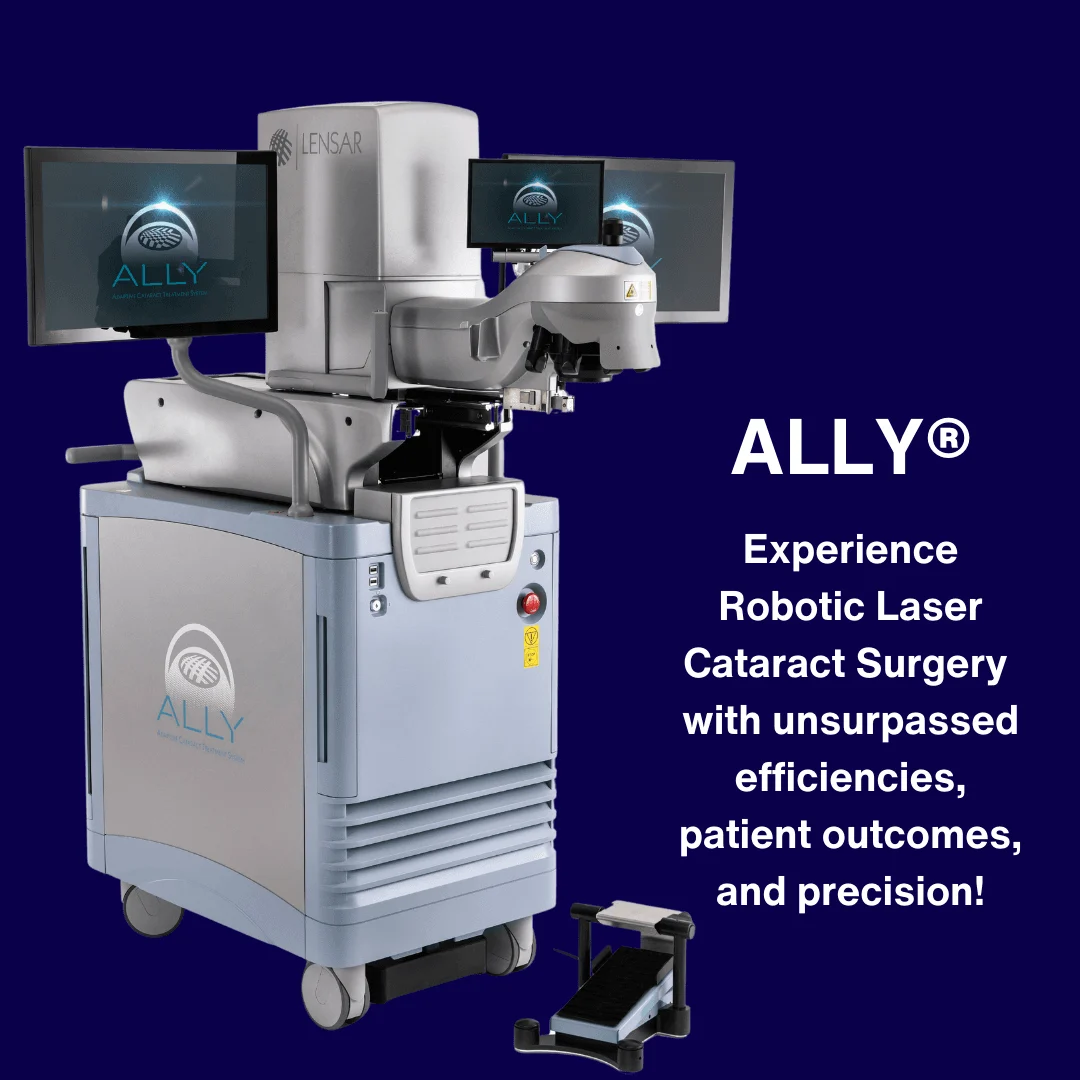
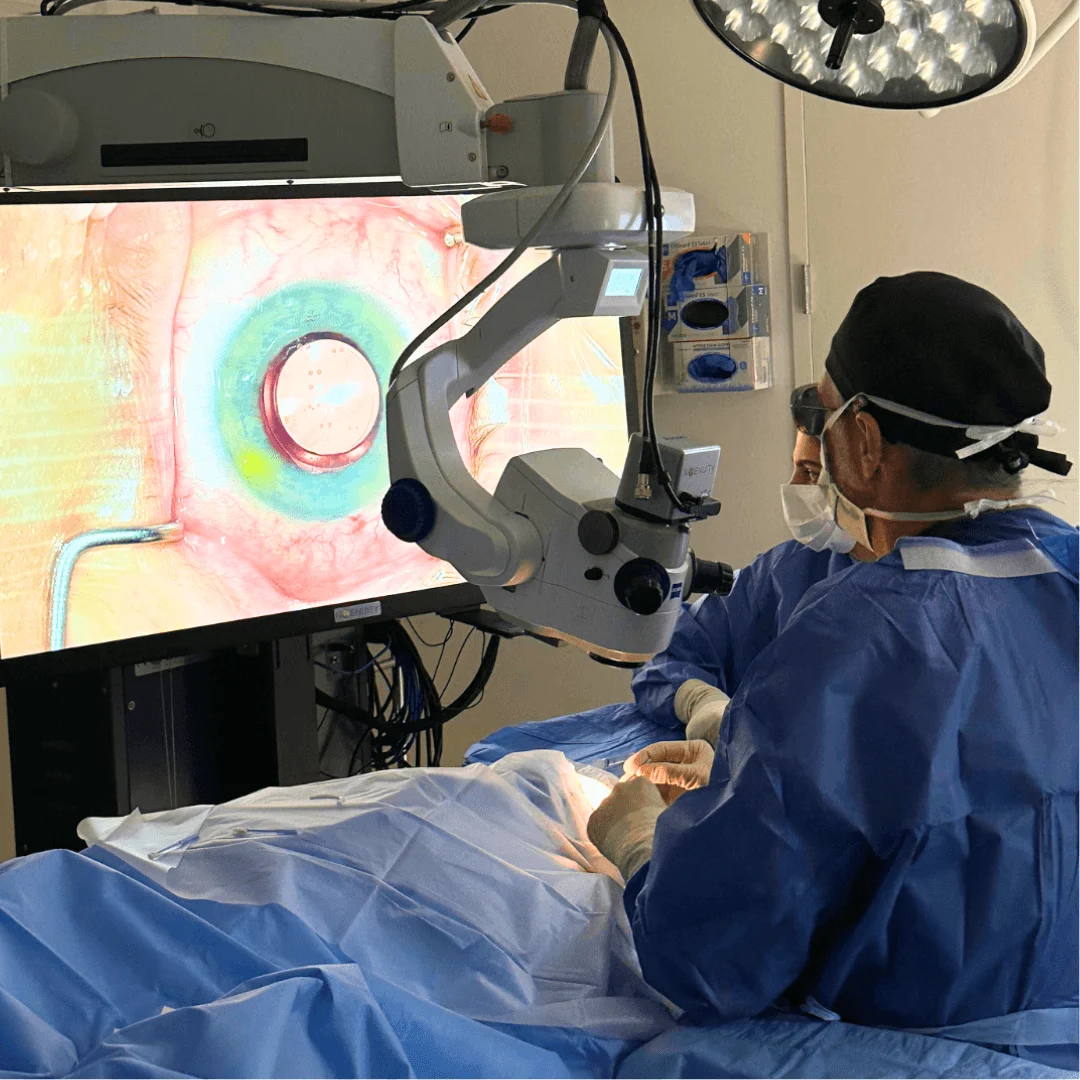
Dr. Arthur Benjamin is one of the first surgeons in Los Angeles to offer custom laser cataract surgery with the revolutionary ALLY® Adaptive Cataract Treatment System. This cutting-edge technology combines advanced imaging with optimized femtosecond laser precision, allowing the entire procedure to be performed in a single, sterile setting—enhancing efficiency, accuracy, and patient comfort.

more
Cataract Surgery: What You Need to Know

Cataract Surgery: What You Need to Know

January 30, 2025

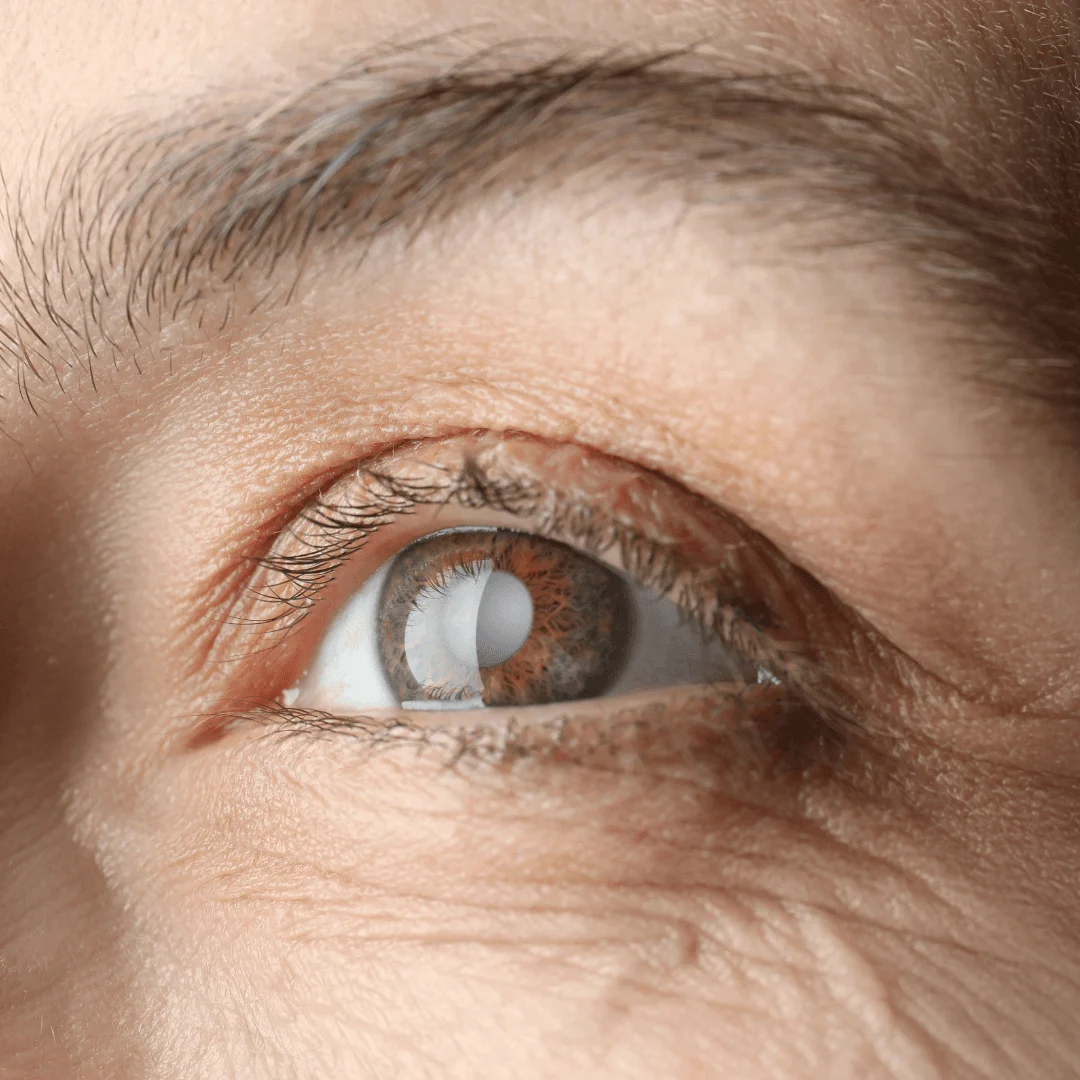
Are you experiencing blurry vision, increased sensitivity to light, or trouble seeing at night? These could be signs of cataracts—a common age-related condition that affects millions of people worldwide. Fortunately, cataract surgery is a safe, effective, and life-changing procedure that restores clear vision and enhances your quality of life.

more
The Essential Guide to Cataract Surgery

The Essential Guide to Cataract Surgery

September 10, 2024

The first thing you should do after receiving the official diagnosis of cataract is to remain calm because they are easily curable. Making the appropriate choices for a location and doctor for treatment is the second and most important step. Here are 8 Important Questions You Should Ask Your Surgeon. By asking any potential surgeon these eight questions, you can feel confident you’re putting your vision in the right hands, and you will soon say goodbye to your cataracts and hello to the clearest vision you have ever experienced.

more
Introducing the Bausch and Lomb Aspire IOL: A New Standard in Vision Clarity

Introducing the Bausch and Lomb Aspire IOL: A New Standard in Vision Clarity

June 12, 2024

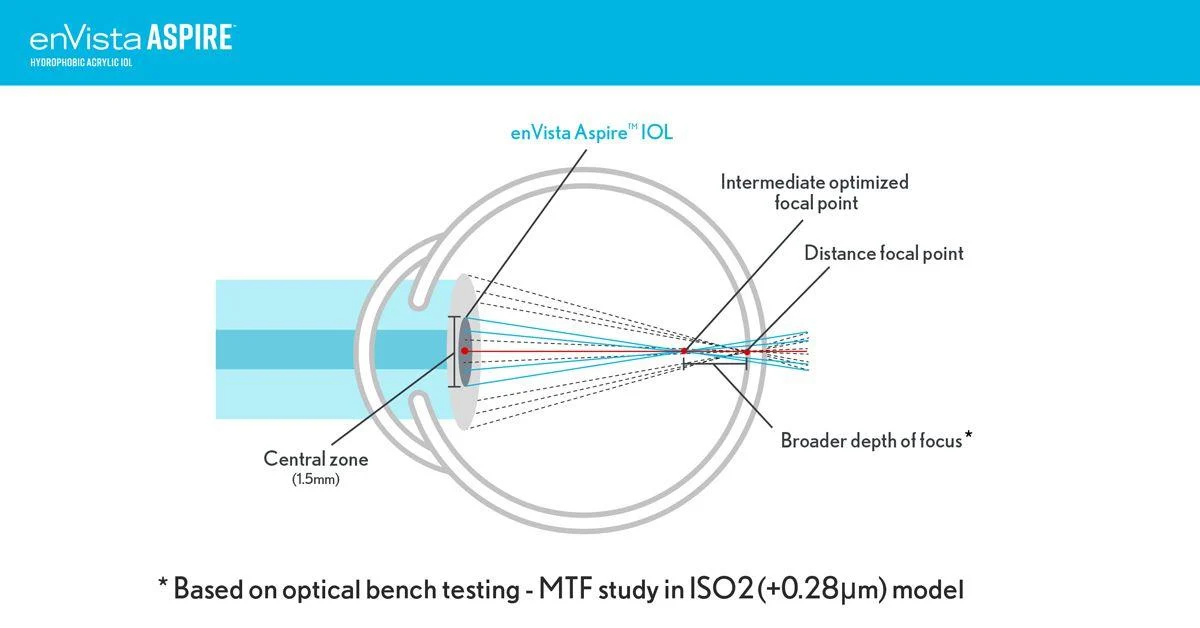
At the Benjamin Eye Institute, we are thrilled to introduce the latest innovation in intraocular lenses (IOLs) from Bausch and Lomb – the Aspire non-diffractive extended depth of focus IOL. Available in both Toric and Spherical versions, the Aspire IOL offers an exceptional option for patients who dream of reducing their dependence on glasses for both near and far vision.

more

SEE WHAT OURPATIENTS HAVE TO SAY

SCHEDULE YOURCONSULTATION TODAY!